
The e-commerce industry is expanding rapidly. However, with thousands of online stores competing for the same customers, ranking on Google has become increasingly difficult. Most businesses attempt to target short, high-volume keywords, yet these terms are dominated by established brands with massive authority.
The smarter approach is to focus on long-tail e-commerce keywords highly specific search phrases that attract users who already know what they want. At Creative Digital Technologies, we help online businesses generate qualified traffic by using data-driven SEO strategies centered on long-tail keyword targeting. In this comprehensive guide, you’ll discover five strategic methods to uncover profitable long-tail keywords for e-commerce, improve search visibility, and convert organic visitors into paying customers.
Understanding Long-Tail Keywords and Their Role in E-commerce Growth
Long-tail keywords are phrases that usually contain three or more words and describe a precise user intent. Instead of competing for vague searches, long-tail SEO allows businesses to reach shoppers who are closer to making a purchase. For example, someone searching “shoes” is browsing, while someone searching “best waterproof hiking shoes for women with ankle support” is ready to buy.
Why Long-Tail Keywords Outperform Broad Terms
Long-tail keywords deliver stronger performance because they:
1: Reduce ranking competition
2: Match specific buyer intent
3: Improve click-through rates
4: Increase conversion probability
5: Support product and category SEO
As your site begins ranking for multiple long-tail variations, Google also starts trusting your domain for broader keywords. Therefore, long-tail SEO is not just a shortcut it’s a scalable growth strategy.
Discover High-Intent Phrases with Professional Keyword Research Platforms
Keyword research tools are the backbone of any successful SEO campaign. However, the real advantage lies not in collecting keywords, but in filtering them strategically. Platforms such as SEMrush, Ahrefs, Google Keyword Planner, and Ubersuggest allow you to analyze:
- Keyword difficulty
- Search volume
- Cost per click
- Trend behavior
- Competitive density
How to Extract Profitable Long-Tail Keywords
Start by selecting a strong seed keyword related to your main product or service, and then refine it strategically. Focus on filtering phrases that contain four or more words, as longer queries usually reflect clearer intent. Next, prioritize keywords that include transactional modifiers such as buy, best, affordable, or for sale, since these signal that the user is closer to making a purchase. After that, sort your list by low to medium difficulty to find opportunities that are easier to rank for without sacrificing value. At the same time, review the CPC data to understand which keywords attract advertisers, because higher CPC often indicates strong buyer interest. Finally, group your keywords based on product relevance so each page targets a tightly focused topic.
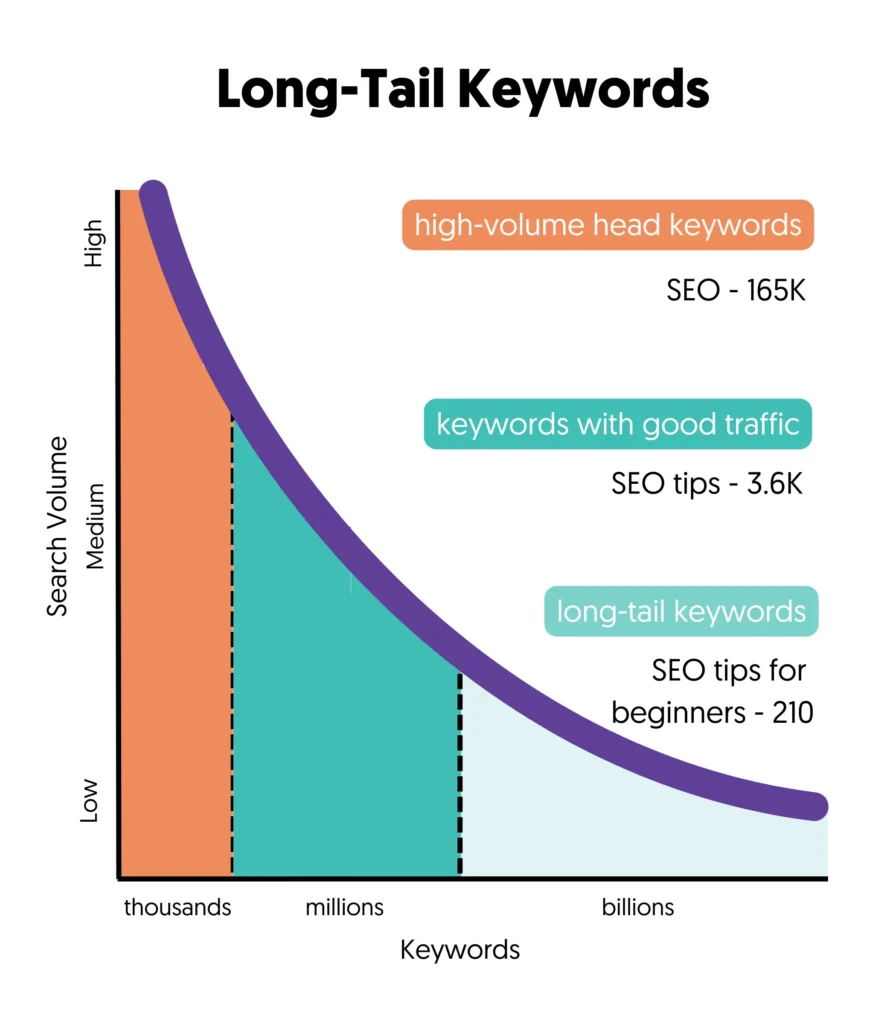
For example, rather than competing for a broad term like “office chairs,” target a more specific phrase such as “best ergonomic office chair for lower back pain at home.” Keywords like this attract users who are not just browsing, but actively comparing options and preparing to make a purchase decision.
Creative Digital Technologies Insight
At Creative Digital Technologies, we combine keyword data with customer psychology. We look for phrases that reflect urgency, comparison, and solution-based searching, which directly influence conversions.
Uncover Keyword Opportunities Through Competitor Intelligence
Rather than working blindly, competitor research allows you to leverage what’s already proven in your niche. By studying competitors, you can uncover:
- Which keywords drive their traffic
- Which pages rank best
- Where content gaps exist
- Which long-tail variations they ignore
Step-by-Step Competitor Keyword Mapping
Start by identifying your top organic competitors and export their keyword lists using tools like Ahrefs or SEMrush. Focus on long-tail phrases (3–6 words) and analyze their intent along with the landing pages they rank for. Then, create more specific, targeted versions of those keywords.
For example, a competitor keyword like “cheap wireless earbuds” can become “best cheap wireless earbuds for gym workouts with mic.” Adding specificity reduces competition and attracts users closer to making a purchase.
Why Competitor Intelligence Matters
Competitor data saves time and reveals demand patterns. More importantly, it helps you position your store where competitors are weak, giving you a natural SEO advantage.
Capture Buyer Queries Using Google’s Search Ecosystem
Google’s built-in features offer a powerful way to understand how users actually search. Instead of guessing, Google shows real queries via:
- Autocomplete
- People Also Ask
- Related Searches
How to Mine Google for Long-Tail Keywords
Type your main keyword into Google and observe:
- Suggested completions
- Common question formats
- Location-based variations
- Comparison phrasing
For example:
Search: “gaming chairs…” Suggestions may include:
- gaming chairs for back pain
- gaming chairs under $200
- gaming chairs for tall people
Each phrase represents an opportunity for content, product targeting, and SEO expansion.
Turn Questions into Revenue Content
Translate Marketplace Language into SEO Opportunities
E-commerce platforms are filled with buyer intent language. Marketplaces like Amazon, Etsy, and eBay reveal exactly how customers describe their needs.
Where to Look for Keyword Gold
Beyond marketplaces, platforms like Reddit and Quora offer real-world language patterns: Examples:
- What is the best smartwatch for hiking trails?
- Which headphones block airplane noise best?
Transform into:
1: best smartwatch for hiking trails with GPS
2: headphones that block airplane noise for travel
This approach ensures your SEO reflects how buyers actually think and search.
Align Keyword Targeting with the Buyer’s Journey
Finding keywords is only part of the equation. What truly impacts performance is how those keywords match the user’s decision stage.
Understanding Buyer Intent Levels
| Stage | Example Search | Page Type |
|---|---|---|
| Awareness | how to choose running shoes | Blog |
| Consideration | best running shoes for flat feet | Comparison |
| Purchase | buy running shoes for flat feet online | Product |
| Loyalty | nike pegasus size guide | Support |
Optimizing Pages for Each Stage
- Awareness → educational blogs
- Consideration → buying guides
- Purchase → product and category pages
- Loyalty → FAQs and support content
You should also:
- Use long-tail keywords in headings
- Optimize meta tags
- Improve internal linking
- Add schema for product pages
Example in Practice
Keyword:
best waterproof hiking boots for women with ankle support
Placement:
- Category page title
- Meta description
- H1 and H2 headings
- Product descriptions
- Internal links from blog posts
This structured optimization increases rankings and user engagement simultaneously.
Why Creative Digital Technologies Is the Right Partner for E-commerce SEO
At Creative Digital Technologies, we don’t chase random traffic. We engineer growth through strategic keyword intelligence and conversion-focused SEO. Our services include:
1: Long-tail keyword discovery
2: Competitor gap analysis
3: Content architecture design
4: On-page SEO implementation
5: E-commerce conversion optimization
We focus on turning search demand into measurable revenue.
Future-Proofing Your Store with Long-Tail SEO
Long-tail keyword strategies are not temporary tactics. They build topical authority, improve site relevance, and prepare your store for algorithm updates. When you consistently publish content around buyer-focused long-tail phrases, Google starts associating your brand with expertise, trust, and solutions not just products. As a result, your rankings stabilize, traffic quality improves, and conversions grow naturally.
Final Thoughts: Win Search Traffic Where It Matters Most
Instead of fighting giants for broad keywords, smart e-commerce brands win by targeting what buyers actually search for. Long-tail keywords let you connect with ready-to-buy users at the right moment. By applying these five strategic methods and partnering with Creative Digital Technologies, your SEO transforms from visibility into profitability.